Your Kids Are Watching You on the Runway of Life: What They're Really Learning
The gene pool reaches back further than you can see. But it is not just genes your children inherit — it is the atmosphere of your home, the way you love, and the version of you they happen to get.
Published 29 April 2026 by Winnie S.
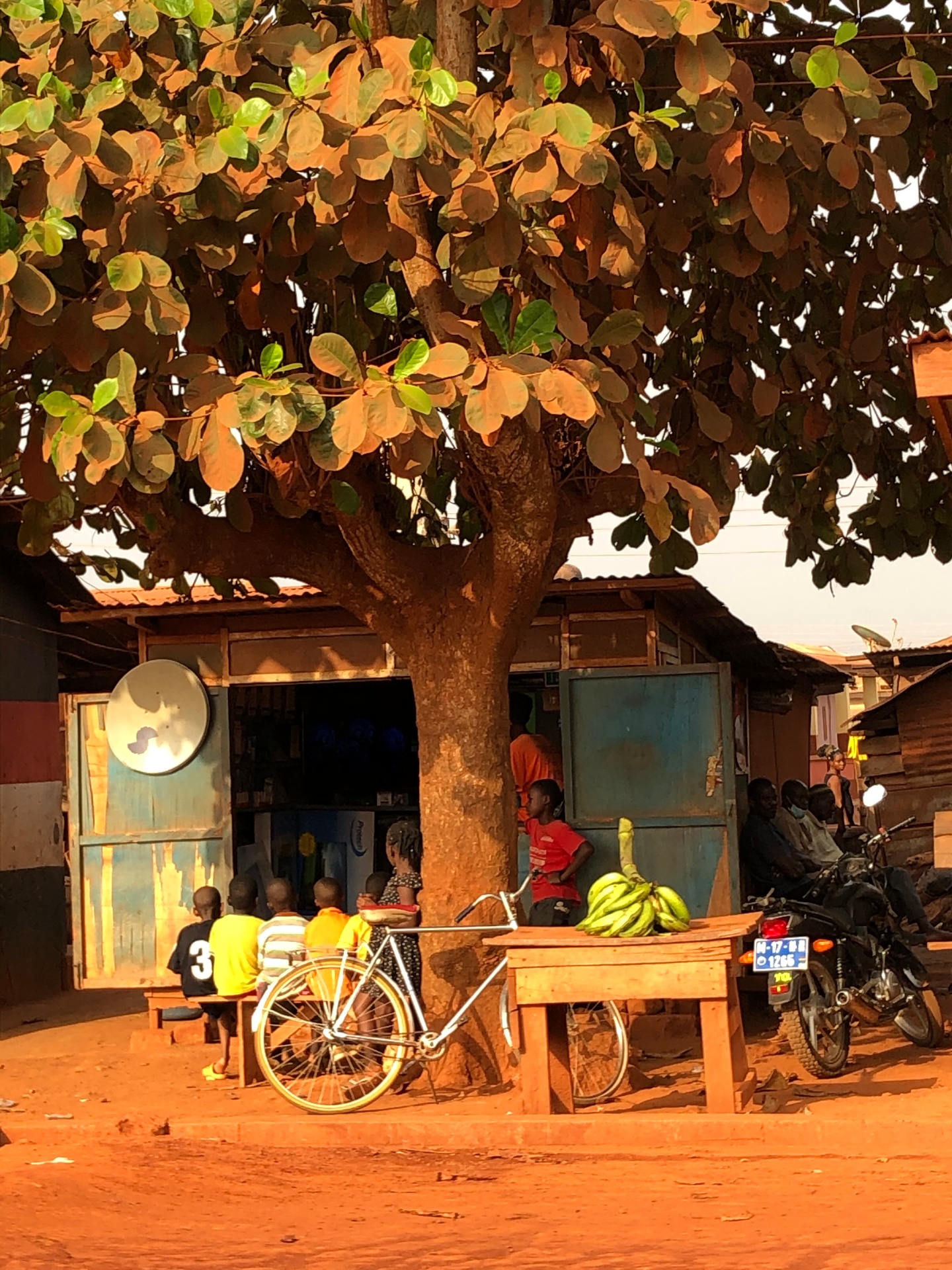
Have you ever looked at your child and seen your grandfather?
Not in a vague way, not just the eyes or the nose, but in something more specific, a gesture, the way they hold their head when they're thinking, the laugh that comes out of nowhere and stops you mid-sentence because you know that laugh, you've heard that laugh, and the person it belonged to has been gone for twenty years.
The gene pool is extraordinary like that. It reaches back further than you can see, mixes things up, skips a generation, borrows something from a great aunt nobody talks about anymore, and delivers it forward into this small new person who has no idea they are carrying any of it. You marvel at it. How the chain works. How it persists. How something that lived in one person's body and mannerisms and way of moving through the world just keeps going, passing itself forward, showing up in hands and laughs and tilted heads in kitchens centuries later.
But it's not just genes.
It's the tics. The mannerisms. The way your mother went quiet when she was angry instead of saying the thing. The way your father filled a room or didn't. The specific atmosphere of the house you grew up in, what it felt like on a Sunday morning, what happened when money was tight, how your parents spoke to each other when they thought you weren't listening, which you always were.
That goes in too. All of it. And it makes up who you are in ways you won't fully see until you are standing in your own home watching your own children and recognising, with a lurch, something you didn't choose to pass on.
Same House, Different Experience
Here's something nobody really talks about honestly. Your siblings grew up in the same house and had a completely different experience of it.
Because your parents were different people at different stages of their lives. If you're the oldest, you got the early years, the ones where two young people were still figuring out who they were, still finding their way into each other, still making the mistakes they'd eventually grow out of but hadn't yet. You were there for all of it. The arguments that went on too long. The tension that sat in rooms. The version of your parents that was still raw and unfinished and trying.
That went in.
But the youngest, the wash belly pickney, the last one, they got something else entirely. By then your parents had worn the sharp edges off each other a little. Less shouting, more latitude, a dress on the credit card because why not, you're the last. A looseness that the oldest child would find almost unrecognisable as the same household.
Same parents. Same house. Completely different inheritance.
And all of you went out into the world carrying your particular version of it, found partners carrying their own completely different version of it, built homes together, and are now producing a new atmosphere that your children are living inside right now, absorbing without being asked, filing away in the part of themselves that will determine what love feels like to them for the rest of their lives.
The Part That Is Hard to Sit With
We barely spend any time alone before we pair off. Seriously, look at the timeline. You finish growing up, which takes longer than anyone tells you and involves more inherited mess than you realise, and almost immediately you are expected to know who you are and what you want and what you are carrying. Most of us haven't done that. Most of us move from the family we came from into the family we're building without ever really stopping to look at what crossed over.
Then boom, kids. And boom, the arguments. And suddenly you are knee deep in it all, the relationship and the parenting and the exhaustion and the unfinished fights and the love that's still there somewhere under all of it, and there is no time to stop and look at any of it properly because there is always something that needs doing right now.
But the children are in that. They are living inside it. Every version of you, the patient one, the tired one, the one who snaps, the one who goes quiet, the one who tries, the one who gives up for a Tuesday and then picks it back up on Wednesday, they are seeing all of it and they are building their understanding of what love looks like from everything they see.
Research drawing on nearly 203,000 adults across 22 countries found that what people experienced at home growing up was one of the strongest predictors of their wellbeing and mental health as adults. Not what they were taught. What they lived inside. The atmosphere of it. And a large analysis covering decades of studies found that how parents handle their own emotions, the hard ones, the conflict, the stress, maps directly onto how their children learn to handle theirs. Not from being told. From being in the room.
They catch it. Like weather.
The Modelling Doesn't Pause
The modelling doesn't pause when things get rough. It doesn't take a break because you're having a hard month or because you're at it constantly and you know things are not good right now. The children are still there. Still in that environment. Still seeing you being who you are in this particular season of your life, and they are internalising it in ways that are completely specific to them, because every child takes the same raw material and makes something different from it depending on their temperament, their position in the family, the version of you they happened to get.
You can't control all of that. Nobody can.
But you can be honest enough to ask the question. Not out loud necessarily, not to anyone else, just to yourself, quietly, in the moments when you're brave enough to look at it.
Are you mindful of how you are being perceived through the eyes of your child right now?
Not the version you're trying to be. The version you actually are on a bad day when nobody is performing anything and it is just you and your partner and the weight of everything between you and the small person in the next room who is, without knowing it, learning what love feels like from everything they hear through the wall.
Breaking the Chain
There is no answer here that fits everyone. Your situation is your own, behind your own closed doors, with its own particular fabric of mess and love and history and trying. The research points in certain directions but it cannot reach inside your specific household and tell you what to do.
What it can do is hold up a mirror.
Because the chain doesn't break by accident. It breaks because someone in it decided to look at it. To actually look, not at the version they wish were true, not at what it looks like from the outside, but at the real version, the one the children are already living inside every day.
That takes a particular kind of bravery.
Not the dramatic kind. The quiet kind. The kind that happens on an ordinary morning when you catch yourself doing the thing, saying it the way it was always said, carrying it forward without meaning to, and you stop, just for a second, and you think, is this what I want them to catch?
Because they are catching something right now.
Make it worth catching.
Sources
Global Flourishing Study, Communications Psychology (2024), 202,898 adults across 22 countries.
Zimmer-Gembeck et al (2022), Parent Emotional Regulation Meta-Analysis, 53 studies.
Bridgett et al (2015), Intergenerational Transmission of Emotion Regulation, Developmental Psychology.