Two Imperfect People Building a Home: Welcome to Your Life
You did not marry a finished person. You married someone in progress, carrying inner demons they did not invite, trying to share a kitchen with yours. That is not a tragedy. That is just the assignment.
Published 26 April 2026 by Winnie S.
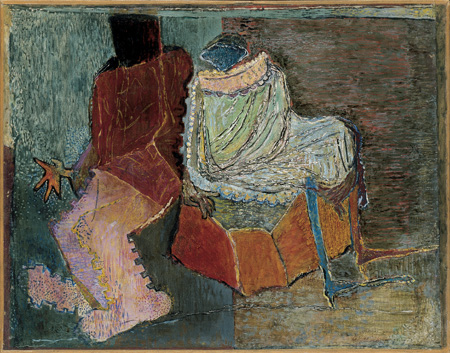
Nobody warns you that when you build a home with another person, you are not actually building a home with another person. You are building it with two people, plus the four parents who raised them, plus the schoolteacher who shamed them in year three, plus the older brother who used to tell them they were stupid, plus the first boyfriend who cheated, plus the boss who broke them in their first job, plus the version of themselves at six years old who is still, somewhere in there, waiting to be told they are loveable. You are building a home with all of that. So are they. So is everybody. Nobody comes empty handed. Nobody arrives at the front door of a marriage as a clean, unmarked, ready to assemble adult.
This is the thing that takes years to understand, and that, once you understand it, changes everything about how you live with another human being. You did not marry a perfect person. You married someone in progress. Someone whose interior life is larger and weirder and more historical than they will ever fully be able to show you. Someone carrying inner demons they did not invite, did not earn, and have not yet, at the time of your meeting them, finished negotiating with. And the home you are building is the place where their demons will inevitably meet your demons, and the two sets will have to work out how to share a kitchen.
This is not a tragedy. It is just the assignment.
The Myth of the Finished Adult
Somewhere along the line, most of us absorbed the idea that adulthood was a destination. That at some point, probably around twenty seven, we would arrive. We would have a job and a relationship and a flat and a sense of who we were and a wardrobe that worked and a skincare routine and a financial plan and a stable, contained inner life. We would be done. We would, having arrived, be in a position to make excellent decisions, including the decision of who to spend the rest of our lives with.
This is, very politely, nonsense.
Nobody is finished at twenty seven. Nobody is finished at thirty seven. The 1985 Levinson study, which followed adult men through the stages of life, and the subsequent research on female adult development, both pointed to the same uncomfortable truth. Adulthood is not a plateau. It is a series of structures we build, occupy, outgrow, dismantle, and rebuild. The self at thirty is not the self at forty five. The self at forty five is not the self at sixty. We keep changing. We keep failing. We keep, quietly, becoming someone slightly different than the person we were last year.
When you marry someone, you are not signing a contract with the person they are. You are entering into an agreement with whoever they are about to become, repeatedly, for the rest of your shared life. They will become someone whose father has just died. They will become someone whose body has changed. They will become someone whose career has cracked open or quietly slid sideways. They will become someone in the middle of a perimenopausal storm they did not see coming. They will become someone whose oldest child has just moved out and who does not, for a few months, know who they are without small people needing them.
The home you build has to be the kind that can hold all of those people. Theirs and yours. That is a much bigger ask than the wedding industry pretends.
Everyone Brings the Family They Came From
Here is something therapists know, and that the rest of us tend to discover the hard way at about year three of cohabitation. You did not just marry your partner. You married, in some functional sense, their entire family of origin. Not the actual people. The patterns. The way conflict was handled or not handled in the house they grew up in. The things that were said and the things that absolutely could not be said. The way affection was given, withheld, weaponised. The role they got assigned at the family dinner table when they were nine years old, which they have probably never fully escaped.
A 2025 paper in BMC Psychology examined how childhood experiences, particularly different kinds of maltreatment, leave footprints on adult attachment in romantic relationships. The research is consistent and depressing in roughly equal measure. The way you were loved, or not loved, as a child shapes the way you reach for love as an adult. The way conflict felt in your childhood home shapes how your nervous system responds to conflict in your adult one. None of this is a moral failing. It is just biology and biography, doing what they do.
What this means, practically, is that your spouse will sometimes react to you in ways that have very little to do with you. They will go cold when you raise your voice, not because they do not love you, but because raised voices in their childhood meant something was about to happen that they could not stop. They will overfunction in the kitchen, not because they are a control freak, but because they were the eldest of four and the family ran on their competence from the age of eight. They will withdraw at the exact moment you most need them present, not because they do not care, but because withdrawal was the only safe move in the family they came from.
You will do versions of the same. You will react to them in ways that have everything to do with the people who shaped you long before they ever met you. The home you are building together has to be a place where both of these histories are allowed to exist without constantly being treated as sabotage.
Two Imperfect People, One Kitchen
The realistic version of marriage is two imperfect people sharing approximately one thousand square feet of floor space and trying to maintain a sense of selfhood while also raising children, paying bills, having occasional sex, sleeping enough, eating enough vegetables, and not, ideally, killing each other.
In that context, perfection is not the goal. Perfection has never been the goal. The goal is something much more modest and much more sustainable. It is to keep building a home in which two flawed humans can keep showing up, mostly, as their better selves. To create the conditions under which both of you can keep growing rather than calcifying. To make the house feel like a place where it is safe to be imperfect, rather than a courtroom where every flaw is being entered into evidence.
The Gottmans, after forty years of watching couples, came to a conclusion that has now been replicated many times. The couples who stay together happily are not the ones with the fewest problems. They are the ones with the highest ratio of positive interactions to negative ones during conflict. Five to one. For every one critical, cold, eye rolling, dismissive moment, there are five warm, generous, repair attempting moments. That is the home that can hold two imperfect people. Not one without conflict. One with enough goodwill in the bank to absorb the conflict that inevitably comes.
> A home is not a place where two perfect people live. A home is a place where two imperfect people have agreed, repeatedly, on purpose, to keep being on the same team.
What You Bring In, You Have to Tend
There is a version of this conversation that ends with, well, we are all damaged, so we should all be patient with each other and that is the end of the article. That is not the end of the article. Patience is necessary, and it is not enough.
The other half of building a home with two imperfect people is that each of you has to take some responsibility for what you brought in. You cannot keep handing your partner the unprocessed inheritance of your childhood and asking them to manage it on your behalf. They did not give you those wounds. They cannot heal them either. The work of dealing with your own demons is, in the end, your work. Therapy, journalling, time, honesty with yourself, the slow excruciating practice of noticing your own patterns before they take over the kitchen.
This matters because the alternative is corrosive. If neither of you ever does the work, the home becomes a stage on which the same unresolved family dramas play out, in costume, forever. He becomes his father. She becomes her mother. Or worse, he becomes her father and she becomes his mother, and now everyone is in the wrong play and nobody can find the script.
The home that holds two imperfect people well is the home where both of them are, in their own quiet ways, working on themselves. Not perfectly. Not dramatically. Just, consistently. Reading the book. Going to the therapist. Apologising on the Tuesday for the thing they said on the Monday. Catching themselves mid sentence and choosing a different sentence. Learning, slowly, that the person standing in front of them is not the person they are actually angry with.
Fighting For Each Other, Not Against Each Other
Somewhere in a long marriage you stop seeing your spouse as the obstacle and start seeing them as the teammate. It does not happen on any particular day. It happens slowly, by accretion, often through hard things. An illness. A bereavement. A child in crisis. A job loss. Something that lands on the household and forces both of you to remember, urgently, that the other person is the one in the boat with you and that bailing water together is the only option.
After that, the small things tend to feel different. Not because they have stopped happening. They have not. But because you have remembered, in your bones, that the person standing across the kitchen from you is also fighting for their life, and that the two of you are doing it side by side, and that this, this messy imperfect tired affectionate thing you have built, is the home.
A 2025 survey on marriage found that eighty six percent of married men and eighty seven percent of married women reported being happy with their lives, compared to sixty six percent of single men and sixty nine percent of single women. The data does not say that marriage is a magic happiness pill. It says that, when it is good, when two imperfect people manage to keep building the home together rather than dismantling it, the result is one of the most reliable predictors of human wellbeing we have.
You Are Not Going to Be Done
The kindest thing the long married know, the thing they wish they could telegraph back to their younger selves, is that you are not going to be done. Not at the wedding. Not at the first anniversary. Not at the birth of the first child or the move into the bigger house or the day you finally feel financially safe. None of those moments will arrive and announce, you may now stop becoming. You will keep becoming. So will they.
The home you build is not a finished structure. It is a thing you keep making, in small ways, every day. The little kindnesses. The small repairs. The decision, again, today, not to say the cutting thing. The decision, again, today, to give the benefit of the doubt. The decision to remember that the imperfect person on the other side of the room is not your enemy, that they came in with their own history, that they are doing their best with the equipment they were issued, and that, miraculously, they have chosen you, again, today, with all of yours.
That is what a home is. Not a place where two perfect people meet. A place where two imperfect people, repeatedly and on purpose, keep building.
Sources
Gottman, J. and Gottman, J.S. (2024). The Magic Relationship Ratio According to Science. The Gottman Institute.
Gottman Institute (2024). Managing Conflict: Solvable vs. Perpetual Problems.
BMC Psychology (2025). Footprints from childhood: intra versus extra familial childhood maltreatment and attachment to romantic partners in adulthood.
The Couples Center (2024). The Link Between Childhood Trauma and Adult Relationships.
Survey Center on American Life (2025). Much Ado About Marriage.
Levinson, D. (1986). The Seasons of a Man's Life and subsequent adult development research.