I Was Furious With Him This Morning and I'll Probably Forget Why
On bad days the relationship looks like a different relationship. A piece on the fog, mood-dependent cognition, and why certainty inside it isn't clarity.
Published 26 June 2026 by Winnie S.
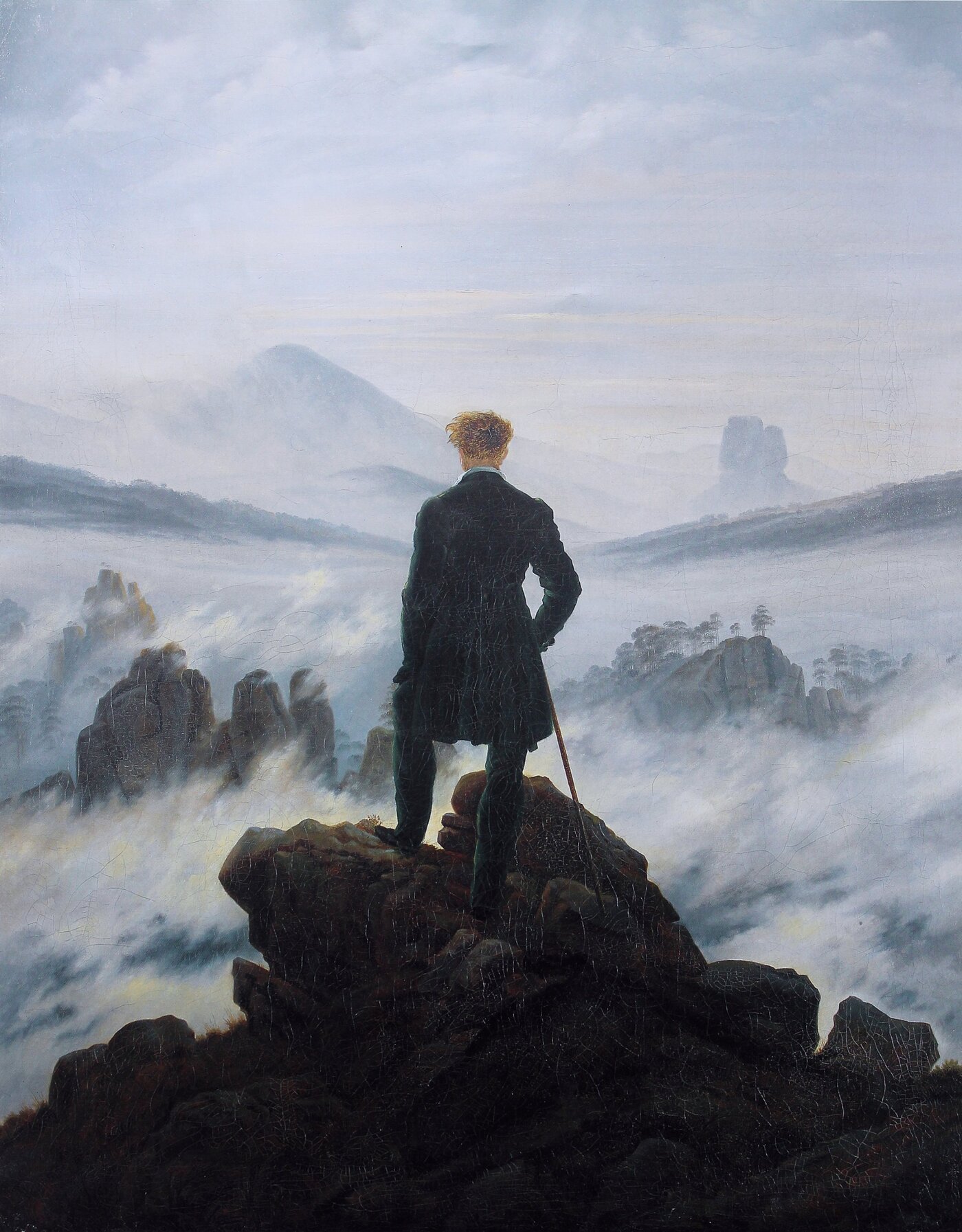
It was his birthday. I was trying. And then something happened, some small thing, the wrong tone on a sentence about toast, the kind of thing that wouldn't register on any rational scale of grievances, and I was gone. Not gone from the room. Gone from the version of myself that was managing fine ten minutes earlier. The fog came down and everything looked different through it, including him, including the birthday, including the relationship I'd been inside without complaint for years.
In the fog I had a case. A proper one. Every piece of evidence was right there, organised and compelling and completely convincing. The thing from last week. The pattern I'd noticed. The way he'd answered a question that morning in a way that meant something, I was sure it meant something. The fog is not a vague feeling. It has a dossier.
The problem with the dossier is that it only goes one way. When the fog is down you don't get access to the other file, the one with the birthday two years ago when he did the thing that made you cry in the good way, or the week he noticed you were struggling before you'd said anything, or the thousand ordinary kindnesses that don't make it into any file because they were too routine to record. The fog is selective. It is also, and this is the part that takes years to understand, absolutely certain it is being objective.
The psychologists Gerald Clore and Andrew Ortony spent a long time studying what they called mood-dependent cognition, the way our emotional state doesn't just colour our experience but actually reorganises what we're able to access and what conclusions we're able to draw.¹ When we feel threatened, we interpret ambiguous actions as threatening. When we feel bad, we retrieve memories that confirm the feeling. The fog doesn't distort reality. It curates it, and the curation is invisible to the person inside it.
What this means in a real relationship is that the version of your relationship you can access on a bad day is a genuinely different dataset from the one you access on a good one. Not a distorted version of the same thing. A different thing. Which means the certainty you feel inside the fog is not evidence of clarity. It's evidence of the fog.
The leave him articles love a bad day. A bad day, translated through the right framework, becomes a symptom. The fog becomes a message from your unconscious that something is wrong. The dossier becomes the truth you've been avoiding. And maybe sometimes that's right, I'm not arguing that nothing is ever worth being angry about, some things absolutely are. But I think most of the time the fog is just fog. Weather that comes in, does its thing, and passes. Weather that has always passed, every single time, without exception, and will pass again.
By the afternoon things were fine. Not resolved, not processed, not the subject of a productive conversation about our needs. Just fine, the way they always are when the fog lifts, which is without drama and without explanation and without any of the narrative tidiness that would make it feel like a proper story. The birthday continued. Nothing was ruined. The dossier dissolved the way dossiers do when the light comes back.
I don't know why the fog comes. I have some theories about tiredness and old wounds and the specific vulnerability of being in close proximity to another person for a very long time. But mostly what I've learned is not why it comes. Mostly what I've learned is that it leaves. The only thing that's ever really helped is refusing to file the dossier until the next morning, because by morning there is almost never a dossier left to file.
And that this, the leaving, is the thing worth remembering.
---
Footnotes
¹ Gerald Clore and Andrew Ortony's work on affect and cognition spans several decades. Their research, summarised in part in Clore and Huntsinger's "How emotions inform judgment and regulate thought" (Trends in Cognitive Sciences, 2007), demonstrates that emotional states function as a kind of lens through which information is filtered, retrieved, and interpreted. The effect is not consciously experienced as bias. It presents as clarity.