The Choice You Don't Remember Making
On the quiet, invisible daily act of choosing to stay in a long-term relationship, and what the research on commitment psychology gets right about it.
Published 3 July 2026 by Winnie S.
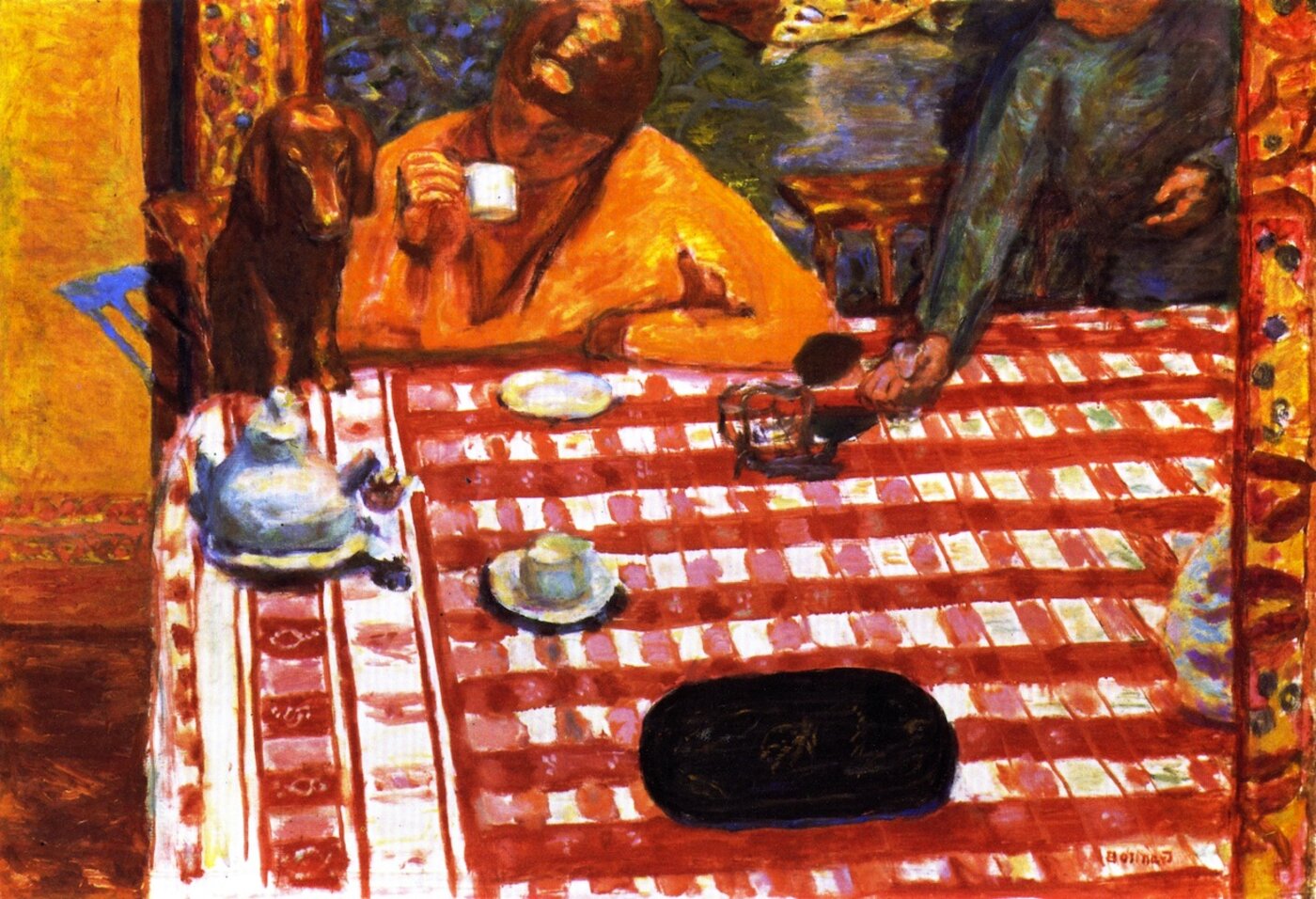
There is a particular kind of morning that happens after years with the same person, where you wake up before he does and watch the light come in through the curtains he picked out and you didn''t love at the time, and you realise you have made a decision without noticing. Not a dramatic one. Not the kind that gets written about. You have decided, again, to stay. You decided it the night before when you turned off your phone instead of scrolling through someone else''s life. You decided it when you made coffee for two without thinking. You will decide it again at lunch, and at the school pickup, and when he tells the same story at dinner that he told last week, and you will laugh in roughly the same place, and the laugh will be real, because the story is, in some quiet way, yours now too.
The culture talks about love as if it were a feeling that arrives and then a feeling that leaves, and the only honest question is whether you''re brave enough to notice the leaving. But anyone who has been in a long relationship knows that the feeling comes and goes constantly, sometimes hourly, and the relationship is not the feeling. The relationship is the structure that holds while the feeling does its weather. It is the thing you keep choosing in the gaps between feeling much of anything at all. The choosing is so small it barely registers as activity. You put his mug on the left because that''s where he reaches. You don''t bring up the thing from Tuesday because it has stopped mattering and you trust yourself to know the difference. You text back when you said you would. None of this looks like love in any framework that would sell. It is love anyway.
Caryl Rusbult, working in the 1980s and onward, spent a long career trying to put numbers on what holds people together when the initial chemistry has done what initial chemistry does, which is to fade. Her investment model, refined across decades and replicated across cultures, argued that commitment isn''t really an emotion at all.¹ It is the accumulated weight of three quieter things: how satisfied you are, what alternatives you perceive, and how much you''ve already put in. Investment was the part most people underestimated. The shared dog, the in-jokes only two people in the world understand, the way you have learned to argue without scorching the earth, the friends you made together, the version of yourself you became inside this particular relationship and could not easily become anywhere else. These things are not chains. They are the slow construction of a place to live.
What I find moving about Rusbult''s work, reading it now, is how unromantic it is and how much more romantic that makes it. Romance as a sales pitch wants you to believe love is something you fall into and either survive or don''t. Romance as a daily practice is something you walk into on purpose, with your eyes open, and then keep walking into, and the keeping is the point. The keeping is also, statistically, what predicts whether you''ll still be there in ten years. Couples high in what Rusbult called pro-relationship maintenance, the small accommodations, the willingness to absorb a bad mood without retaliating, the choice to interpret ambiguity generously, were the ones who lasted, and the ones who reported being glad they had.²
I think often about what the research calls accommodation. It sounds like a hotel word, something passive. In practice it is one of the most active things a person can do. He snaps at you about the dishwasher and you have, in the half second before responding, a choice. You can match his tone and earn a small immediate satisfaction, or you can register that he didn''t sleep well and his mother called and the dishwasher is not the dishwasher. The second response costs something. It costs the pleasure of being right out loud. What it buys is the slow, almost invisible reinforcement of a pattern in which neither of you weaponises the bad moments, and over years this pattern becomes the floor you walk on. You stop noticing the floor. That''s how you know it''s working.
Somewhere in the middle of a long relationship, between the third and the tenth year depending on the people, the question stops being do I love him and becomes do I want to keep building this. The first question is about feeling. The second is about will. The culture does not really equip you for the second question, because the second question is unsellable. You cannot make a film about a woman deciding, on a Tuesday in February, that the man rinsing a pan in her kitchen is the person she wants to keep rinsing pans next to. There is no swell of music. But this is, I think, what marriage actually is, if it is anything: the repeated, deliberate, mostly cheerful act of saying yes to a particular life with a particular person, on days when no would also be available, and choosing yes not because no is unthinkable but because yes is, on balance, more interesting.
Eli Finkel''s work on what he calls the all-or-nothing marriage is useful here, but in a way slightly different from how it''s usually cited.³ The standard reading is that modern marriages ask too much, expect a single partner to do work that used to be distributed across a village, and therefore strain under impossible expectations. That''s true. But there is a quieter implication, which is that couples who calibrate their expectations to what this specific relationship can actually carry, and who invest in the parts that are real rather than mourning the parts that aren''t, do better than anyone predicted they would. They do not have the marriage in the magazine. They have a marriage. The distinction turns out to matter.
What no one tells you, before you''ve done it for a while, is how funny long love gets. Not the comedy of early infatuation, which is mostly the comedy of two people performing themselves and pretending not to be performing. The comedy of a long relationship is the comedy of two people who have, finally, run out of performance, and discovered that what''s left is genuinely entertaining. He does the voice. You do the other voice. You both know exactly which neighbour you''re imitating and neither of you would do this for anyone else on earth. There is a private dialect, built up over thousands of unmemorable evenings, and it is one of the things you would have to leave behind if you left, and one of the things you don''t want to leave behind, and one of the reasons, in a Tuesday-afternoon way, you don''t.
The staying is not always virtuous. Sometimes the staying is tired. Sometimes the staying is a decision you make because you cannot face the logistics of unstaying. I am not interested in pretending otherwise. What I want to say is only that the staying, even on its tired days, is not nothing. It is the daily reinvestment in a structure that has, over time, become more useful than the sum of the moments that built it. The structure holds you on the days you cannot hold yourself. It holds him on his. The structure is what you have made by choosing, again and again, in ways too small to remember, to keep making it.
Late in the evening he comes into the room where I''m reading and asks if I want tea. I say yes. He brings the tea. He has brought me tea ten thousand times. He will, with luck, bring me tea ten thousand more. None of these teas will appear in any record of our life. They are the record of our life. The choice to stay is not made in big moments. It is made in the kitchen, at the kettle, in the small turning toward each other that happens so often it stops looking like a turn at all. And this, I have come to think, is the most accurate definition of love available to anyone who has lived inside one for long enough to stop confusing love with the feeling of love. Love is the turn. The turn, repeated. The turn, chosen, on a Tuesday, when no one is watching, and nothing is at stake, and everything is.
Research References
¹ Caryl E. Rusbult, John M. Martz, and Christopher R. Agnew, "The Investment Model Scale: Measuring commitment level, satisfaction level, quality of alternatives, and investment size" (Personal Relationships, 1998). Rusbult''s framework has been replicated across decades and cultures and remains one of the most empirically supported accounts of why people stay in relationships, romantic and otherwise.
² Caryl E. Rusbult, Julie Verette, Gregory A. Whitney, Linda F. Slovik, and Isaac Lipkus, "Accommodation processes in close relationships: Theory and preliminary empirical evidence" (Journal of Personality and Social Psychology, 1991). The accommodation research showed that the willingness to respond constructively to a partner''s bad behaviour, rather than reciprocating it, was one of the strongest individual predictors of long-term relationship survival.
³ Eli J. Finkel, The All-or-Nothing Marriage (Dutton, 2017). Finkel''s argument is more nuanced than the headline suggests; while modern marriages demand more from a single partner than any previous era, couples who recalibrate their expectations to fit the relationship they actually have, rather than the one the culture told them to want, tend to report higher satisfaction over time.