Why Does My Partner Always Get Their Way? The Quiet Cost of Always Giving In
My partner always gets their way and I always give in. Is that a problem? A long look at one-sided compromise, sacrifice research, and the difference between a relationship that works and one that quietly tilts.
Published 26 August 2026 by Winnie S.
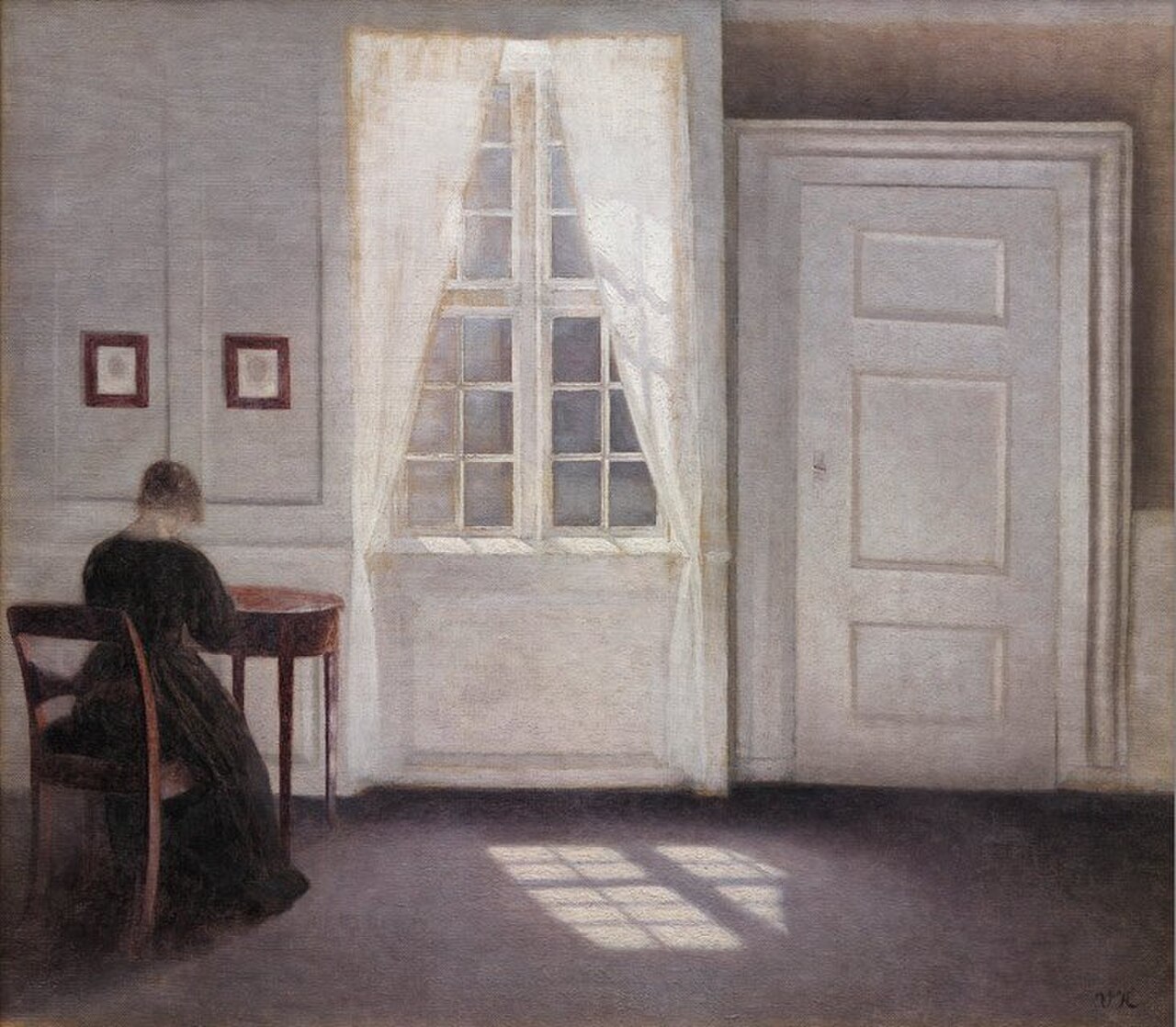
Quick answer: why does it feel like my partner always gets their way?
If you are usually the one giving in on small things, Saturdays, dinners, where to sit, what to watch, the relationship is not broken, but it is tilting. Research on sacrifice in couples finds the same act can strengthen a relationship and quietly deplete the person doing it, and the deciding factor is whether the giving in runs in both directions over time. One-sided compromise is the slowest, hardest-to-spot way a relationship erodes.
---
Laying the Floor
We wanted different things for a Saturday. He wanted to stay in, properly in, the kind of in where you don't get dressed and the day has no shape. I wanted to go somewhere, anywhere, the noise of other people, a reason to put shoes on. Neither of these is a big want. Neither of us was being unreasonable. We just wanted two different Saturdays, and only one Saturday was actually available, and someone was going to get the version they didn't choose.
This happens constantly in a long relationship and almost nobody writes about it, because it doesn't sound like anything. It's not a betrayal. It's not a red flag. It's just two people who want different things on the same afternoon, which turns out to be the actual texture of sharing a life with someone, far more often than any of the bigger, more discussed things.
What I've come to think is that every one of these small moments is doing one of two things, and the difference between them matters more than it looks like it should.
The psychologist Francesca Righetti has spent years studying what happens when one person in a couple gives something up for the other, and her research keeps landing on a tension that doesn't resolve neatly.¹ There's what she and others call the benefit hypothesis, the idea that giving something up for your partner builds trust, signals commitment, makes the relationship stronger. And there's the burden hypothesis, the idea that giving something up costs you something real, a small loss that doesn't disappear just because it was for love. Both turn out to be true. The same act of giving something up can build the relationship and quietly deplete the person doing it, and which one wins out seems to depend on something specific: whether it happens once, or whether it happens to the same person, over and over, while the other person never seems to be the one giving anything up at all.
This is where I think the language we use does us a disservice. We talk about compromise as though it's a single thing, a virtue you either have or don't, when really there's a meaningful difference between two people each giving up something, on different days, so that the load evens out over time, and one person quietly restructuring their preferences around the other person's, again, in a pattern that never seems to run the other way.² The first is what makes a long relationship work. The second is what makes a long relationship erode, slowly, in a way that's almost impossible to point to because no single instance of it looks like anything.
On the Saturday in question, I gave in. We stayed home. It was, genuinely, fine, better than fine actually, because I'd been picturing the version of the day where I dragged him out and he was somewhere else the whole time, present in body and absent in every way that mattered, and that would have been worse than the quiet day we actually had. The giving in wasn't a loss. It was an exchange, and the currency was a future Saturday when he'll give in instead, not because I'll keep score, but because the relationship itself seems to keep some kind of rough ledger, an unconscious sense of whose turn it tends to be.
But I noticed something else in the middle of it, which is that for about thirty seconds I wanted to win the Saturday. Not negotiate it. Win it. The specific, slightly embarrassing sensation of wanting my version of the day to be the one that happened, as though there were a prize for it. There wasn't a prize. There was just a Saturday, going one way or the other, and somehow my body had registered it as a contest anyway.
The researchers who study what's called zero-sum thinking, the assumption that one person's gain automatically means another person's loss, have found it's remarkably sticky as a mental habit, and remarkably badly suited to most of what it gets applied to.⁴ It makes sense that it's sticky. Almost everything else in life runs on it. School ranks you against everyone else in the room. Work has the promotion only one of you gets, the review that measures you against your peers. Even rest has started running on it, the holiday that has to look better than someone else's, the version of your life you're quietly being judged against. By the time two people get into a long relationship, the scoreboard has been running in the background for decades. It doesn't switch off because you walked through a different door.
Some competition is genuinely good for a relationship. The board game where you're both actually trying to win. The tennis with another couple, the real score, the contest you both agreed to have. That kind has rules and an ending and a handshake. It's a completely different thing from the kind that creeps into a disagreement about a Saturday, where one of you walks away having won an argument that was never a contest, and the other walks away having quietly lost something that won't show up anywhere but is real all the same. A relationship was supposed to be the one place the scoreboard didn't follow you. Most of us just forgot we were still carrying it when we walked in.
I think this is what people mean, underneath the more dramatic language, when they talk about building something together. Not a project with a blueprint. More like laying a floor, board by board, where each board is a moment someone wanted one thing and got something slightly different, and the floor only holds together if the boards come from both directions. A floor built entirely from one person's boards isn't a floor. It's a ramp, and somebody's always walking uphill.
In some long relationships, one partner has, over years, become extremely good at not wanting things. Not because they don't want things. Because wanting things and then not getting them, repeatedly, eventually teaches a person to stop registering the want before it becomes disappointment. This isn't peace. It looks like peace from the outside, and it can even feel like peace from the inside for a while, but it's closer to what Righetti's research calls a transactive loss, a thing quietly subtracted that nobody, including the person it's happening to, is keeping track of.³
What I want to say, to anyone reading this and recognising something, is that the small daily negotiations, the Saturdays, the dinners, the holidays, the thousand tiny forks in the road where two people want different things, are not a sign that something's wrong. They're the actual material. The relationship is made of them, the way a wall is made of bricks, and no single brick looks like much. But it does matter, hugely, whether the bricks are coming from both of you. Not in equal numbers on any given day, that's not how it works and trying to make it work that way turns love into accounting. But across the run of things. Across the months. If you find yourself unable to remember the last time you got the version of the day you actually wanted, that's worth noticing. Not as a crisis. As information. The floor is supposed to be built from both directions, and if it isn't, it's worth saying so, gently, before the unevenness becomes the thing you've both quietly agreed never to mention.
---
Footnotes
¹ Francesca Righetti et al., "Sacrifices: Costly prosocial behaviors in romantic relationships," Current Opinion in Psychology (2021), and Righetti et al., "Sacrifice in close relationships: Motives, emotions, and relationship outcomes," Social and Personality Psychology Compass (2017). Righetti's research is among the most sustained empirical work on the psychological costs of sacrifice within couples, and her finding that the same act can simultaneously strengthen a relationship and deplete the individual making it is one of the more genuinely complicated results in the field, resisting the simpler "sacrifice is good" framing common in popular advice.
² The distinction between mutual compromise and one-sided sacrifice is discussed in clinical literature on couples therapy; therapists working with this distinction note that when one partner consistently restructures their preferences around the other's without reciprocity, the relationship tends toward what gets described as imbalance, with the partner doing the accommodating gradually losing their sense of their own preferences altogether.
³ The concept of transactive loss comes from Righetti's framework around the burden hypothesis: even when a sacrifice serves the relationship and is made willingly, it can represent a real loss to the person making it, a loss that doesn't disappear simply because it was chosen, and that can accumulate over time in ways neither partner consciously tracks.
⁴ Zero-sum thinking, the tendency to perceive situations as involving a fixed amount of benefit such that one party's gain implies another's loss, has been studied extensively as both a general worldview and a situational bias. Research from the University of British Columbia and Stanford Graduate School of Business, drawing on data from over 10,000 participants across six countries, found this mindset reduces cooperation even in situations where working together would benefit everyone, and that people routinely misjudge genuinely mutual outcomes as having a winner and a loser, a phenomenon sometimes called win-win denial.