Ordinary Love Is Where Love Keeps Going
You stop asking. That's how you know. Somewhere around year six, the questions drain out of the day. Are they going to leave? Are they going to stay? How are we going to make it? You stop asking them the way you...
Published 27 October 2026 by Winnie S.
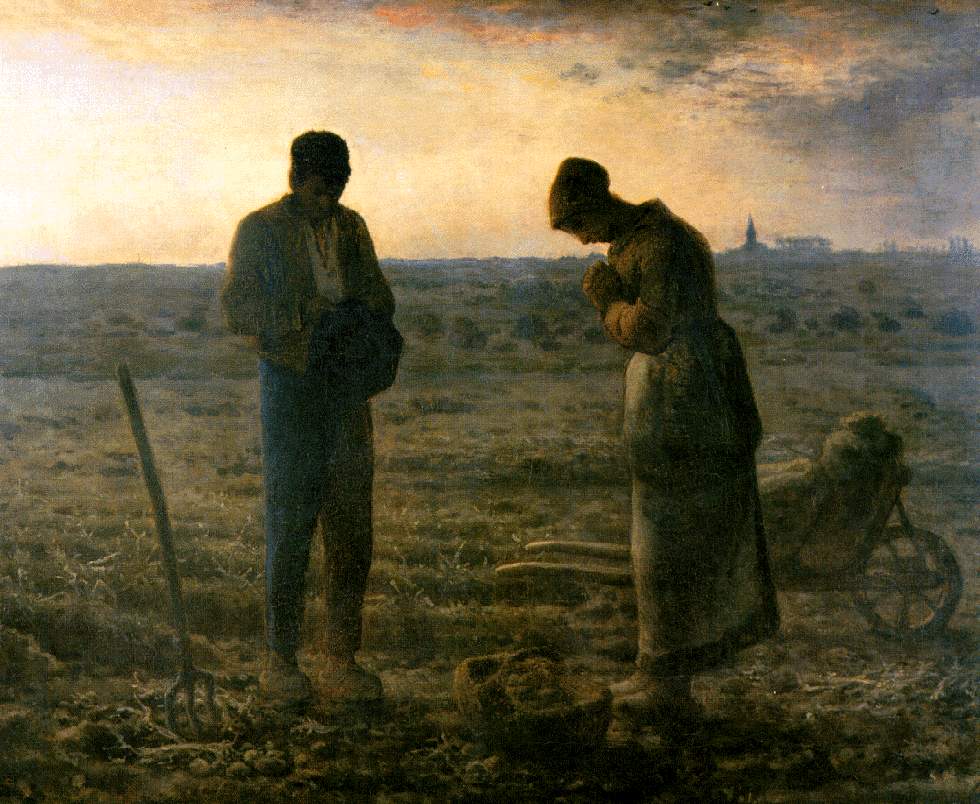
You stop asking. That's how you know. Somewhere around year six, the questions drain out of the day. Are they going to leave? Are they going to stay? How are we going to make it? You stop asking them the way you stop checking whether the house is still standing. It never needed your constant surveillance in the first place.
People hear "ordinary love" and assume the fire went out. I hear it and think the interrogation is over.
Those questions should be answered before you marry someone. Not on the wedding day. Before. Marriage doesn't settle a doubt, it furnishes it. If you've been with someone two, three years and you catch yourself saying "oh my God, how has the time flown," take that as a good report. It means the years went the way they should, without a single audition. And you're about to do three more with them, and the sureness compounds the same way the years do.
I'm not saying everyone is a hundred percent steady. We all have a limit, a wobble, a week where the old fear taps the glass. But a partner who loves you normally leaves no doubt about it. The certainty is the default. When the doubt is still there at the three-year mark, still not trusting, still waiting for the other shoe, that's worth sitting with, because uncertainty doesn't usually age into trust. It ages into more years of uncertainty, dressed as caution.
My feed keeps trying to convince me otherwise. "I thought he was a good man, and then he turned out to be cheating." I'm tired of it. The format is doing a job on us: it takes one man's betrayal, wraps it in suspense, and serves it to women as information. It isn't information. It's entertainment with the tension of a horror film and the paperwork of a wedding.
Here's the part the format never mentions. I don't know a partner who could find the time to cheat. Mine spends his days with me, with the kids, with the friends we share. His only outings are once-in-a-blue-moon meetups with the boys and his sporty endeavours. No window exists. And the time-use researchers, who measure this stuff hour by hour, found the same pattern across tens of thousands of ordinary couples: people are happier, feel more meaning, and carry less stress during time spent with a spouse than in time spent apart [1](https://pmc.ncbi.nlm.nih.gov/articles/PMC4712716/). Being together isn't a concession the ordinary couple makes. It's the default they chose.
So when someone is forever elsewhere, entire weekends gone with the mates from school, a binge-drinking trip every month like they're still nineteen, I pay attention. The people who want ordinary committed love love being with you. The recurring vanish is the odd thing.
Am I wrong about this? Possibly. So I checked. The research doesn't say everybody cheats. It says something more useful: in a German panel study of about a thousand infidelity events, relationship functioning had already been sliding, in both partners, for years before the affair ever happened. The well-being of the unfaithful and the betrayed alike started declining first, and showed little recovery after [3](https://www.psychologicalscience.org/journals/psychological-science/09567976221116892/). The betrayal didn't drop out of a clear sky. The distance arrived first, and the affair just moved in.
That's the tell, then. Not one weekend away, which is a life, not a trend. The trend. The slow withdrawal that arrives before anything has a name. And presence doesn't guarantee fidelity either; nobody can promise you a person by watching them closely enough. What you can watch for is the direction of the current: toward the house, or away from it.
The rest is the good part. In 2012, Bianca Acevedo and her colleagues scanned the brains of people married around twenty-one years who said they were still intensely in love. Shown a photo of their partner, the same reward regions lit up as in new lovers. What was missing was the anxious, obsessive circuitry. They had the wanting without the panic. Two decades in, the brains looked like honeymoon brains with the fear removed [4](https://pmc.ncbi.nlm.nih.gov/articles/PMC5130596/).
Old villages left their doors open in daylight. Anyone could have walked in. Nobody did, because everyone knew whose house was whose. A settled marriage works the same way. Certainty stops guarding the entrance and starts using it.
The fairytale ends at the wedding because the writers didn't know what came next. The good part comes next.
References
Acevedo, Aron, Fisher & Brown (2012), Social Cognitive and Affective Neuroscience, "Neural correlates of long-term intense romantic love". Stavrova, Pronk & Denissen (2023), Psychological Science, "Estranged and Unhappy? Examining the Dynamics of Personal and Relationship Well-Being Surrounding Infidelity". Genadek, Flood & García Román (2016), Demography, "Trends in Spouses' Shared Time in the United States, 1965 to 2012"; Genadek et al. (2016), Journal of Marriage and Family, "Time for Each Other".