If Love Were Logical, None of Us Would Be Here
Eight billion people, 121 million unintended pregnancies a year, and a brain wired for obsession, not optimisation. A long look at why the modern script of build a career, wait for the right one, plan it perfectly keeps misfiring, what arranged marriages quietly get right, what South Korea and Japan reveal about the cost of love without reciprocity, and why the process was never the point.
Published 22 July 2026 by Winnie S.
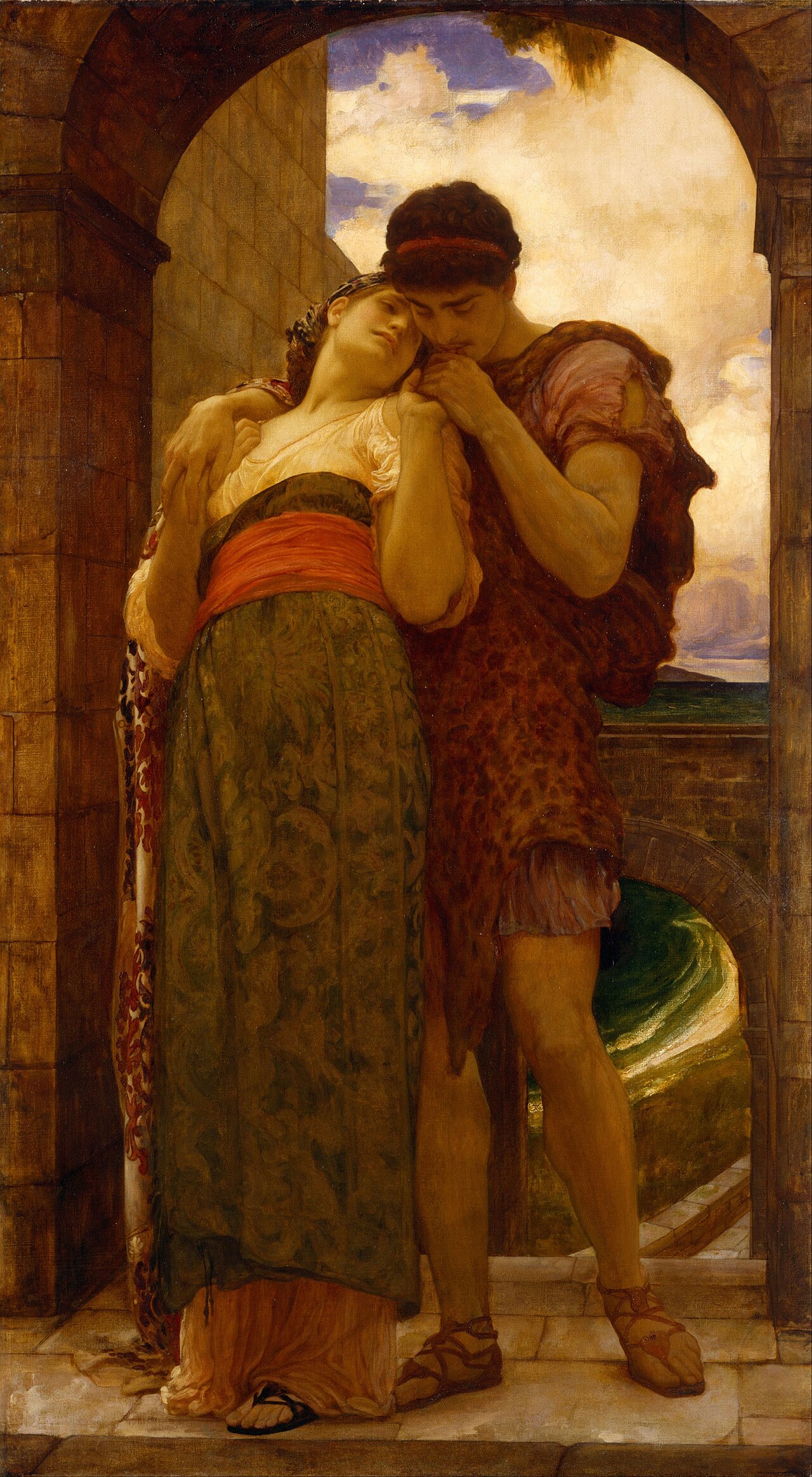
There are roughly eight billion people walking around right now, and the projections say we are heading for ten. Ten billion accidents of attraction, ten billion arguments that ended in someone staying, ten billion mornings where two people who probably should not have made it work, did. The Guttmacher Institute and the WHO put the number of unintended pregnancies at around 121 million a year worldwide. Most of us, statistically speaking, are a surprise. Our parents are a surprise. Their parents were a surprise. Go back far enough and the whole family tree is one long, beautiful, slightly panicked accident.
And yet the script being handed to people in their twenties and thirties reads like a procurement brief. Build the career first. Have savings. Have a plan. Wait for the right person, because the right person, apparently, will appear precisely on schedule, fully formed, emotionally available, financially solvent, and conveniently located near a good school district. The whole thing is delivered with the smug certainty of someone who has never actually looked at the data, or at history, or at what is happening right now in countries that tried to reduce love to a social arrangement and found it was not quite that simple either.
Look at what is actually happening inside your skull when you fall for someone. Helen Fisher put people who had just fallen in love into fMRI scanners and watched the ventral tegmental area light up like a slot machine. Dopamine, norepinephrine, a strategic dip in serotonin that makes you obsess. The same circuitry that lights up in addiction. This is not a careful weighing of pros and cons. This is your brain doing what it has done for two hundred thousand years, which is identify a person and decide, with absolute conviction and almost no supporting evidence, that this is the one. Your prefrontal cortex, the part that writes pro-con lists, is largely along for the ride.
So when anyone tells you to be rational about love, they are asking you to override the oldest, loudest, most insistent system in your body using the youngest and most easily distracted one. Good luck.
Here is where it gets complicated. Because not everyone approaches love the same way, and the results are not what you would expect.
Arranged marriages, the system the modern West has largely filed under backwards, tell a quietly inconvenient story. A 2013 study by psychologist Robert Epstein found that couples in arranged marriages reported deeper love after five years than those in love marriages. A ten-year study in India found arranged marriages delivering around 20 percent higher long-term satisfaction. The divorce rate in India sits below 4 percent, compared to 40 to 50 percent in the United States. More than 60 percent of urban Indians now prefer a semi-arranged system, where family is involved but personal choice remains, and the satisfaction data holds.
None of this means arranged marriage is superior. Some of that low divorce rate is stigma and economic dependency, not happiness, and it would be dishonest to pretend otherwise. But some of it is something worth sitting with: the idea that love, rather than being the prerequisite for commitment, can grow inside it. That choosing someone with shared values and family support and then building a life might produce something that feels, twenty years in, indistinguishable from the lightning-bolt version. That the destination might not care so much about the route.
The data suggests no meaningful difference in marital satisfaction between the two systems when you control for the variables. Which is another way of saying: people find love where they look for it, and the looking matters less than we think.
Then look at what happens when the arrangement fails women without the love.
South Korea has one of the lowest birth rates on earth, 0.72 as of 2023, well below the 2.1 replacement threshold. It also has the highest suicide rate among OECD countries, a statistic that has held for twenty-five years. More than a third of Koreans now live alone. There is a word, godoksa, for dying in isolation, and the rate is rising at nearly nine percent a year, with men dying this way at four times the rate of women.
The 4B movement, which spread from Korea in the 2010s and gained international attention in 2024, asks women to opt out entirely: no dating, no sex, no marriage, no children. It is easy to frame this as radical, as women who simply hate men. That framing is lazy and wrong. Women did not arrive at 4B because they stopped valuing connection. They arrived there because South Korea has one of the widest gender pay gaps in the developed world, because more than 40 percent of Korean women take a career break after childbirth that most never recover from, because the expectation is that a woman will work a full professional job, manage the home, raise the children, and watch her husband go out drinking while he cannot tie his own shoelace. The movement is not a rejection of love. It is a response to a system that asked women to pay an unbearable price for it.
Japan carries a version of the same wound. Han Kang's The Vegetarian, Asako Yuzuki's Butter, the broader shelf of East Asian literary fiction by women, are not really about food. They are about the cost of being a woman in a society that requires everything from you and names your resulting exhaustion a personal failure. The mental health data is there in the background of every page. Between 2019 and 2020, the number of Japanese women who died by suicide jumped 15 percent. Gender inequality and social isolation, the research shows, are not separate crises. They are the same one.
The men are not fine either. Male suicides in Japan peaked at over 30,000 in the late 1990s following economic collapse. The loneliness epidemic in Korea is killing middle-aged men at a rate that has no equivalent in countries with stronger social fabric. Extreme duty, the Japanese and Korean ideal of self-erasure in service of work and family, turns out to extract a cost from everyone, just in different currencies.
What Korea and Japan illuminate is not a failure of love, but the failure of systems that replaced love's actual substance, mutual care, reciprocity, the sense of being seen, with performance. With roles. With the appearance of a family without its warmth.
The Western version is its own kind of experiment, and it is not obviously going better.
We had the freedom. No arrangement, no duty, no script beyond the vague Disney one about finding the one. And many people did find something real. But the one has a 40 to 55 percent divorce rate in the United States. The MeToo movement revealed, in case it was not clear, that freedom from arranged marriage did not mean freedom from power imbalances. What we replaced structure with was often not love but confusion, a generation trying to navigate intimacy without tools or guidance, inside a culture that had thoroughly monetised loneliness and called it dating apps.
Three kids, two divorces, a cold microwave dinner, estranged from people you made. That is not a failure of love. That is what happens when people approach the most ancient and bewildering human experience with either no framework or the wrong one.
Ali Binazir once worked out the rough odds that any specific person would be born, accounting for the right parents meeting, the right sperm reaching the right egg, the right ancestors surviving every plague and famine and unlucky river crossing back to the start of the species. The number he landed on was something like one in ten to the power of two and a half million. The exact maths is poetic more than scientific, but the point survives the scrutiny. You should not exist. The person you are sitting next to should not exist. The fact that the two of you are in the same room, breathing the same air, capable of looking at each other and feeling that small private jolt, is so statistically absurd that calling it a miracle understates it.
And what do we do with this miracle? We hesitate. We ask whether he earns enough. We ask whether she ticks the boxes. We treat the most ancient and bewildering force in human experience like a quarterly review. Or, worn down by disappointment, we opt out entirely, which is a rational response to an irrational wound.
>>>Love is home. A home with love is enough. The process was never the point.<<<
There is no clean conclusion here, because there is not one. Human beings have been finding their way to each other through arranged meetings and electric accidents and everything in between since before language existed. Some of those unions were built on duty and became love. Some were built on love and became duty. Some became neither and ended. The process has never been logical. We have simply, at various moments in history, convinced ourselves that we had found the rational system, and then watched it produce its own particular variety of heartbreak.
What seems true across all of it is this: the people who make it, whether they met on an app or were introduced by their parents in 1987 or found each other in the cracks between some other life entirely, share something that has nothing to do with the method. They stopped treating love as a problem to be solved and let it be what it is. Which is not a reward for optimising correctly. Which is not a destination you arrive at by following the right route. Which is, at its best, just a place: warm, ordinary, sufficient, and against all the odds, yours.
Love is home. A home with love is enough. Go back through any system human beings have ever built to get there, arranged or accidental, dutiful or electric, and the ones that worked all arrived at the same thing.
The process was never the point.
---
Sources
Guttmacher Institute and WHO, Family Planning and Unintended Pregnancy data. Helen Fisher et al., Romantic Love: An fMRI Study of a Neural Mechanism for Mate Choice, Journal of Neurophysiology. Robert Epstein, How Love Emerges in Arranged Marriages, 2013. Myers et al., longitudinal arranged marriage satisfaction data, 2014. Statistics Korea; OECD Suicide Rates. The Nation, Gender Inequality and Japan's Mental Health Crisis, 2023. PBS NewsHour reporting on the 4B movement, 2024. Ali Binazir, The Probability of Your Existence. Marshall Sahlins, Stone Age Economics. Han Kang, The Vegetarian. Asako Yuzuki, Butter.