How to Make Your Relationship Better When Nothing Is Actually Wrong
Flat is not the same as broken, but the research suggests it is not harmless either. Boredom in a marriage predicts falling satisfaction nearly a decade later, independently of how satisfied you were to begin with. What lifts an ordinary relationship is attention: noticing out loud, responding well to good news, redistributing the planning that goes unrecorded, and doing something unfamiliar together often enough that you are still capable of surprising each other.
Published 9 September 2026 by Winnie S.
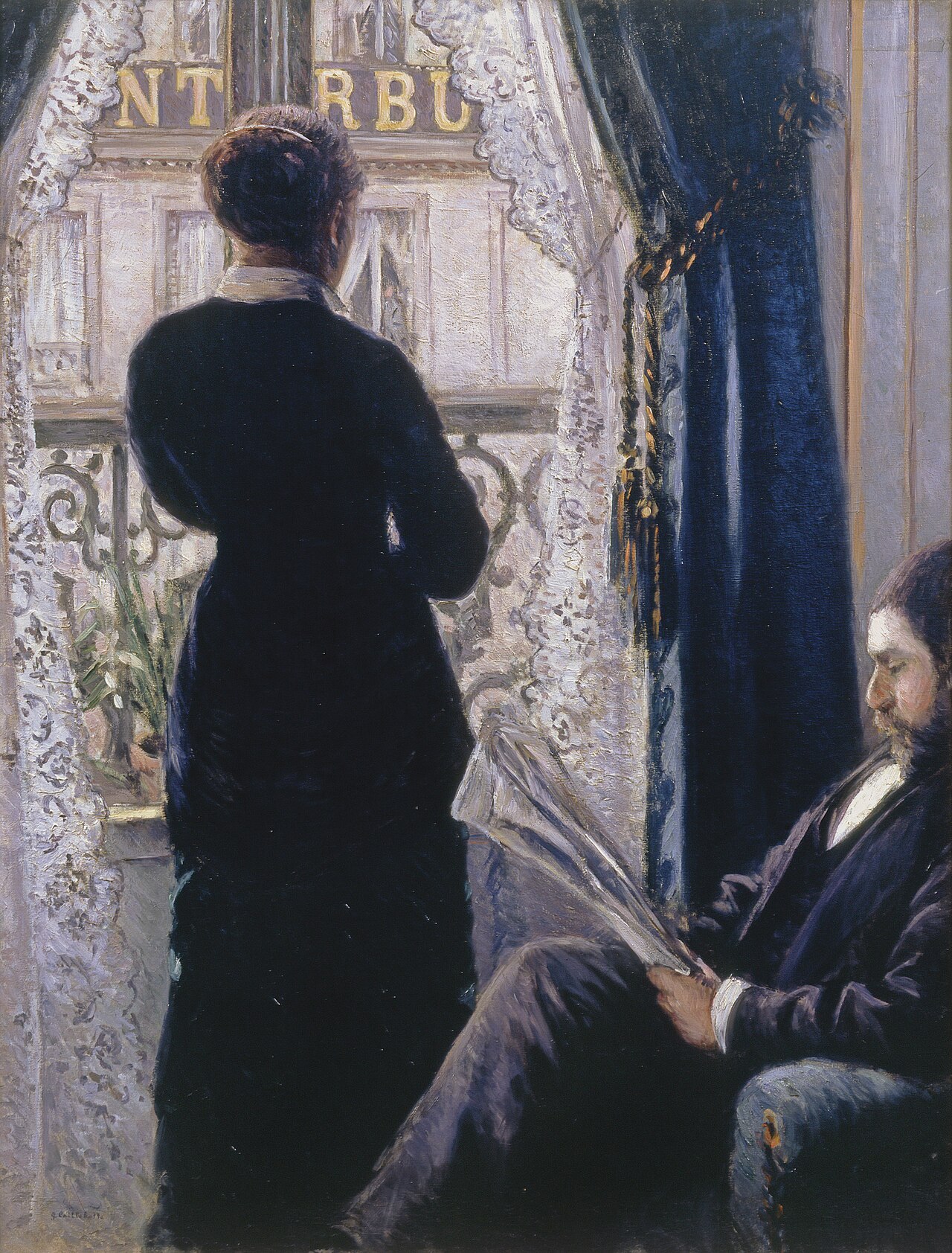
The dishwasher gets emptied, the keys go in the bowl by the door, somebody says the bins are tomorrow. There is no cheating and no shouting and no obvious wound to point at, only the sense of two people running parallel logistics operations under one roof, passing each other in a corridor with the efficiency of colleagues.
Boredom does its own damage
In 2009, researchers following a representative sample of 123 married couples in the Detroit area asked them, at seven years in, how often in the past month they had felt their marriage was in a rut, doing the same thing all the time and rarely getting to do anything exciting together. Nine years later, at year sixteen, they asked how satisfied those same people were. Boredom at seven predicted lower satisfaction at sixteen even after controlling for how satisfied people had been at seven, which means it was not simply that unhappy people found their marriages dull. Boredom appeared to be doing its own separate work, and the pathway ran through closeness: being bored undermined how close people felt, and the loss of closeness took satisfaction with it.
The couples who looked fine
There is a study that ought to unsettle anyone who takes the absence of complaint as evidence of health. Lavner and Bradbury identified 136 couples who reported stably high satisfaction across the first four years of marriage, then looked at who had divorced by the ten-year follow-up. The couples who eventually split had shown more negative communication, more negative emotion, and poorer social support as newlyweds, despite reporting satisfaction as high as anybody else's. There was no difference in satisfaction. There was no difference in positive behaviours. The difference sat entirely in how badly the difficult moments were handled, and it was invisible in how happy people said they were.
Good news matters more than bad
The most useful finding here is counterintuitive enough that it has still not filtered into general advice. In one study, 79 couples were videotaped taking turns discussing recent positive and negative events. Two months on, how partners responded to the good news predicted relationship wellbeing and breakup more closely than how they responded to the bad. Being reliable in a crisis is table stakes. Being genuinely, actively pleased when your partner is pleased turns out to be the rarer and more predictive thing, and it is available most evenings, in small denominations.
Say the thank you the same day
A daily diary study of cohabiting couples found that gratitude arising from an ordinary thoughtful act predicted increases in relationship connection and satisfaction the following day, for both the person who received the kindness and the person who performed it. In the largest analysis of relationship predictors ever assembled, appreciation came out third among all relationship-specific variables tested. It is the cheapest available intervention and almost nobody performs it deliberately.
The thinking that comes before the task
Allison Daminger interviewed 70 people across 35 couples and named what most households have been arguing around the edges of for years. Household labour is not only the physical tasks, it is the cognitive work underneath them, which she breaks into anticipating a need before it becomes urgent, working out the options, deciding, and then monitoring whether the thing actually happened. Anticipation and monitoring fell disproportionately to women, and because the work is invisible to both the person doing it and the person not doing it, it becomes a frequent source of conflict without ever quite being named. No date night survives being planned, booked, arranged around and remembered by one person.
Seven minutes of something unfamiliar
Aron and colleagues ran a questionnaire study, a door-to-door survey, and three laboratory experiments, and found that couples who spent seven minutes on a novel and mildly arousing task together reported a measurable rise in relationship quality afterwards, compared with couples given something mundane and compared with couples given nothing at all. The effect held on independent ratings of their videotaped conversations, and it ran through boredom, meaning the novelty worked by dislodging the rut rather than by making anyone happier in general.
Seven minutes. Not a sabbatical, not a retreat. A bad game of tennis, a recipe neither of you can execute, a route home you have never taken.
Research References
Tsapelas, I., Aron, A., and Orbuch, T. (2009). Marital boredom now predicts less satisfaction 9 years later. Psychological Science, 20(5), 543-545. https://doi.org/10.1111/j.1467-9280.2009.02332.x
Lavner, J. A., and Bradbury, T. N. (2012). Why do even satisfied newlyweds eventually go on to divorce? Journal of Family Psychology, 26(1), 1-10. https://doi.org/10.1037/a0025966
Gable, S. L., Gonzaga, G. C., and Strachman, A. (2006). Will you be there for me when things go right? Journal of Personality and Social Psychology, 91(5), 904-917. https://doi.org/10.1037/0022-3514.91.5.904
Algoe, S. B., Gable, S. L., and Maisel, N. C. (2010). It's the little things: Everyday gratitude as a booster shot for romantic relationships. Personal Relationships, 17(2), 217-233.
Joel, S., Eastwick, P. W., et al. (2020). Machine learning uncovers the most robust self-report predictors of relationship quality across 43 longitudinal couples studies. PNAS, 117(32), 19061-19071.
Daminger, A. (2019). The cognitive dimension of household labor. American Sociological Review, 84(4), 609-633. https://doi.org/10.1177/0003122419859007
Aron, A., Norman, C. C., Aron, E. N., McKenna, C., and Heyman, R. E. (2000). Couples' shared participation in novel and arousing activities and experienced relationship quality. Journal of Personality and Social Psychology, 78(2), 273-284.